
Shakespeare’s Contemporary dramatists
Image
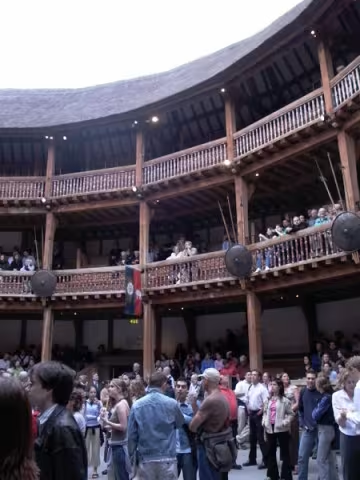
The Elizabethan and Jacobean theatres specialized in new plays which had relatively few performances over a period of a few weeks. There was thus a huge appetite for fresh writing, and hundreds of plays, many now lost, were produced, often collaboratively. In this section of Great Writers Inspire some of these non-Shakespearean plays and authors are introduced through a combination of podcasts, ebooks and supporting materials. Some plays – such as John Webster’s empathic presentation of a woman who follows her own desires in The Duchess of Malfi (1614) – have had an ongoing life in the modern theatre. Others – such as Thomas Dekker’s contemporary fairytale The Shoemakers Holiday (1599) are interesting precisely because they so closely map onto the immediate context of their writing and performance, giving us a window into the late Elizabethan world. Read more
| # | Title | Description | Contributor |
|---|---|---|---|
| 1 | The Tamer Tam'd: John Fletcher | Fletcher’s play is a riposte to Shakespeare’s The Taming of the Shrew: in this lecture I discuss… | Emma Smith |
| 2 | Tis Pity She's a Whore: John Ford | This lecture discusses the play’s reboot of Romeo and Juliet and other Elizabethan plays, its… | Emma Smith |
| 3 | The Witch Of Edmonton | A collaborative play about witchcraft, bigamy - and a talking dog - what more could you want? | Emma Smith |
| 4 | A Chaste Maid in Cheapside: Thomas Middleton | This lecture discusses comedy, fertility, and all those illegitimate children in this play about… | Emma Smith |
| 5 | The Alchemist: Ben Jonson | Written in the context of plague in London, The Alchemist’s plot and language are deeply concerned… | Emma Smith |
| 6 | Dr Faustus: Christopher Marlowe | Emma Smith's lecture on this infernal play discusses Elizabethan religion, the revisions to the… | Emma Smith |
| 7 | Sejanus | ebook version of Sejanus | |
| 8 | Bartholomew Fair | ebook version of Bartholomew Fair | |
| 9 | The shoemakers' holiday | ebook version of The shoemakers' holiday | |
| 10 | The Spanish tragedie | ebook version of The Spanish tragedie |