
Stephen Duck
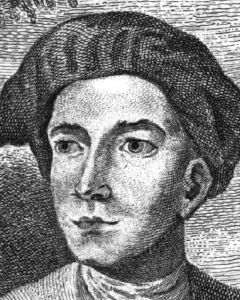
Briefly, in 1730, the most talked about poet in England was an agricultural labourer. The story of Stephen Duck (1705-1756) is a remarkable one, as the title page of the unauthorised collection of his verse, Poems on Several Subjects, explains. He was 'lately a poor Thresher in a Barn in the County of Wilts, at the Wages of Four Shillings and Six Pence per Week' until his poems
"were publickly read by The Right Honourable the Earl of Macclesfield, in the Drawing-Room at Windsor Castle, on Friday the 11th of September, 1730, to her Majesty. Who was thereupon most graciously pleased to take the Author into her Royal Protection, by allowing him a Salary of Thirty Pounds per Annum, and a small House at Richmond in Surrey, to live in, for the better Support of Himself and Family."
Among the poems that so intrigued the Queen and the court was 'The Thresher's Labour', Duck's account of a year in the life of an agricultural labourer. Presenting a more realistic account of agricultural labour than had previously appeared in literary verse, this is Duck's most important poem, and it proved to be a vital model for other labouring-class writers who wanted to write about…
Subscribe to Stephen Duck
via RSS